Scalping vs Swing Trading at Stockity
Get to know the differences between scalping and swing trading styles — from time horizon, stress level, to capital required — before determining which trading style is right for you.
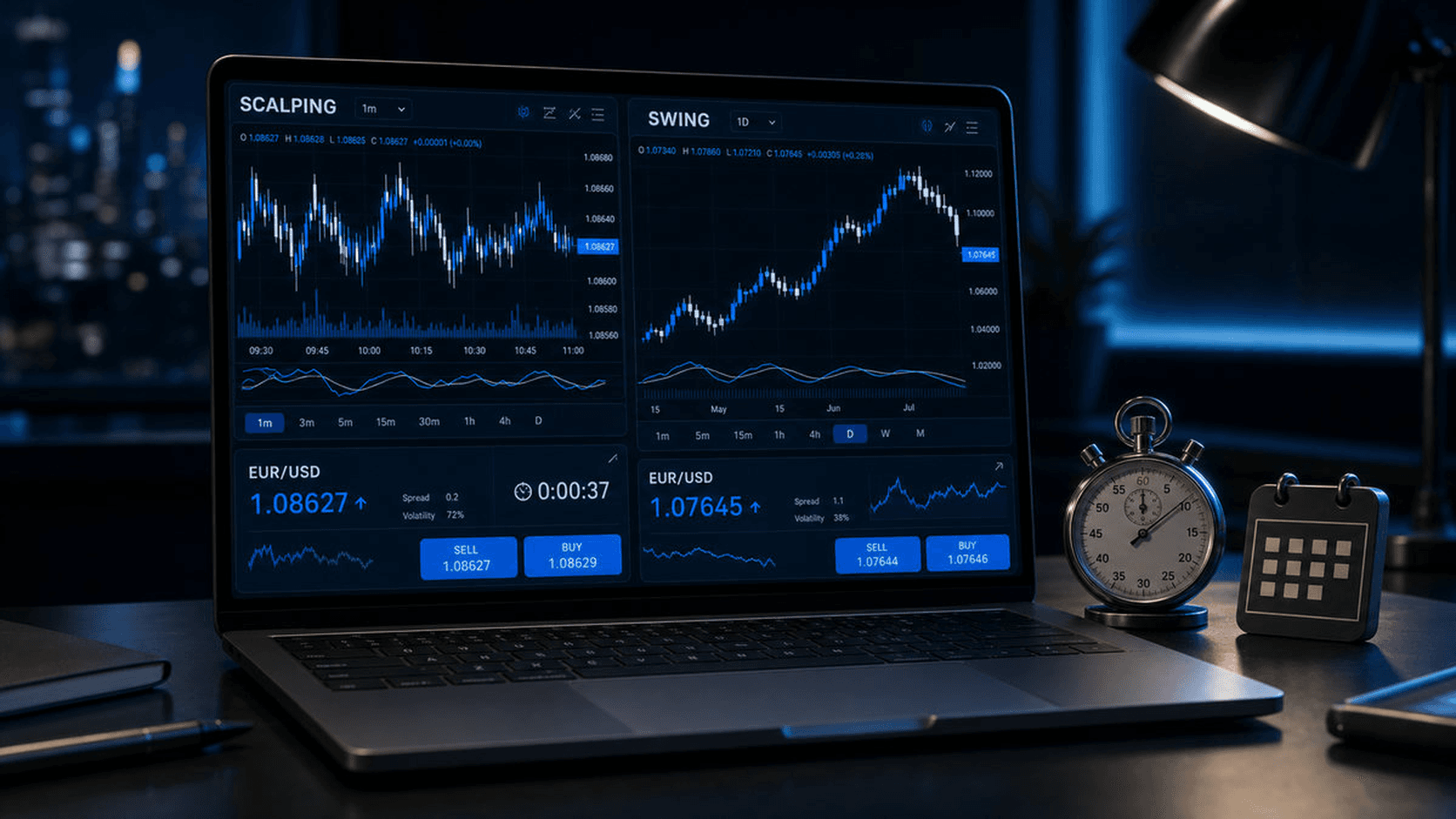
One of the most basic decisions before starting trading is to choose a style that suits your personality and free time. The two styles most often compared to beginners are scalping and swing trading. This article discusses the differences between the two objectively, including for practice on the Stockity demo account.
Important: Online trading carries high risks, including the possibility of losing all funds used. This article is general educational in nature, not financial advice.
What is Scalping?
Scalping is a trading style with a very short time horizon — positions are typically opened and closed within seconds to a few minutes. The goal is to take small profits from price movements that often occur in one day.
What is Swing Trading?
Swing traders hold positions longer, from several hours to several days, to catch larger "swings" in price movements. This type of trader usually does not need to monitor the screen constantly.
Main Comparison
| Aspect | Scalping | Swing Trading |
|---|---|---|
| Position duration | Seconds to minutes | Hours to days |
| Transaction frequency | Very high | Less frequently |
| Monitoring time | Almost constantly | More flexible |
| Stress level | Tends to be high | More control |
| Impact of transaction fees | More pronounced (high frequency) | Smaller per unit time |
Advantages and Disadvantages of Each
Scalping is suitable for those who have a lot of free time and can stand the pressure of making quick decisions, but are prone to mental fatigue and mistakes due to hasty decisions.
Swing trading is more friendly for those who have other activities (work, college), but requires patience to hold a position even though the price has moved temporarily against the direction.
Tips for Choosing a Suitable Style
- Be honest with yourself about how many hours per day you can really spend monitoring the market.
- Try both styles on demo account Stockity before deciding, without risking real funds.
- Pay attention to your emotional reactions — do you tend to panic when prices move quickly, or are you bored of waiting for a long time.
- There is no absolutely "more correct" style; The important thing is to be consistent with plans and risk management.
Conclusion
Scalping and swing trading are both valid approaches, but suit different personalities and lifestyles. Trying it out on a demo account is the safest way to find out which style really suits you before using real funds.
Use funds you can truly afford to risk, and consider consulting an independent financial advisor before making any financial decisions. This article is educational in nature, not a guarantee of trading results.
Editorial Team Stockity Unofficial
Stockity Unofficial is an independent information portal and not the official Stockity website.